On the ground
Our destinations, our partners, how we responded to changing visitor patterns, and the launch of India.
Cultural adventure across eleven destinations
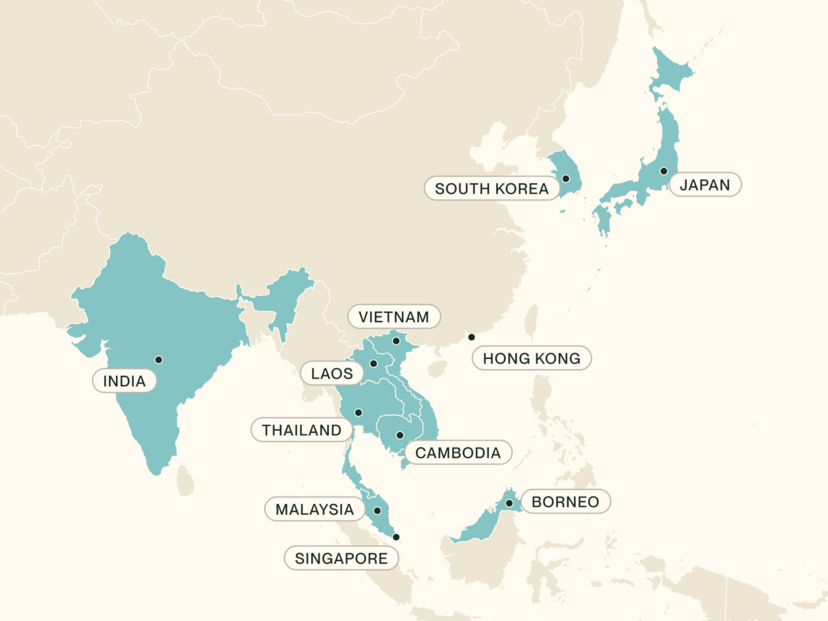
What started in a spare bedroom in Bristol in 2000 now spans eleven destinations across Asia (with more in the pipeline). We’ve expanded in response to our customers who want to experience more of the region, but only into destinations we know well enough to do it properly.
That takes time. Years of building relationships with guides, partners and communities. India launched in 2025 as our eleventh destination after significant groundwork. It was a huge milestone for us on our 25th anniversary.
It also means staying close to destinations as they change. The choices in this section are about what we saw happening on the ground, and how we responded.
When tourism concentrates
Over the years, we've seen destinations change from the inside. Nowhere more so than Japan. In the year we launched, Japan welcomed 4.8 million inbound visitors. In 2025 that figure reached 42.7 million. Similar patterns are visible elsewhere in Asia, as international demand grows rapidly and continues to concentrate around established routes and gateways.
It's the concentration we're watching most closely. Five prefectures out of 47 account for 75% of all international overnight stays in Japan. The most visited places get more popular year on year.
We're part of that story, and the position we're in means we can do something about it. Deep relationships in destinations, and with enough scale to route demand differently.

When you get a large increase in tourism to a destination, you get an extra layer between the visitor and the real place – a tourism barrier. Japan didn't have that before. It does now. And it's one we need to help break down.

Our undertourism work in 2025
Undertourism
Undertourism is our practical response to tourism concentration.
It means directing appropriate demand towards places that want more visitors, have the capacity to welcome them and can benefit meaningfully from longer stays and local spending.
We already send customers widely across Japan. In 2025, we arranged overnight stays in 245 destinations across the country. Without focus, dispersal can be too scattered to shift demand meaningfully, or simply move pressure from one place to another.

Below carrying capacity
Appropriate infrastructure to absorb more visitors
Social licence to operate
Local willingness to welcome more visitors
Outside top 5 prefectures
Japan’s five most visited prefectures account for around 75% of international overnight stays.
Visitor rate below 10%
An international visitor rate below 10%, according to Japan National Tourism Organisation (JNTO).
Overnight-capable
Able to support overnight stays, which contribute around 11 times more to local economies than day trips.
Accessible by public transport
Reachable without domestic flights or long private transfers.
Our five undervisited destinations
We selected five focus destinations for 2025.
Each destination follows a hub-and-spoke model: a well-connected gateway city provides the base (hub), while surrounding communities offer distinctive stays, local relationships and experiences that encourage customers to travel further and stay longer (the spokes).
Launching each destination required coordinated product development, local partner engagement, staff training, itinerary redesign and sustained marketing.

Toyama
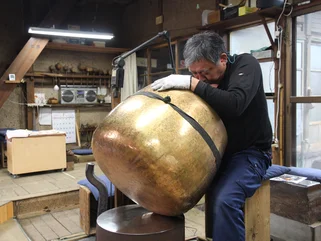
Toyama is only a couple of hours from Tokyo by bullet train, yet most international visitors pass it by. In 2025, we worked with local partners to make it a more regular part of our trips, with a focus on overnight stays, independent local suppliers and experiences rooted in craft and regional identity.
- 140: Room nights
- +1,067%: Room night increase vs 2024
- £79,893: Estimated economic impact
- 90%: Direct spend to independent local suppliers
- 95: Net Promoter Score (trips including Toyama)

"Tourism isn't our aim it's our means. It's almost impossible to revitalise a region with just its local residents. We want visitors to participate and join us in preserving it."
Nagoya
There is a Japanese term, Nagoya-tobashi, for tours and itineraries that visit Tokyo and Osaka but skip the city between them.
Nagoya is also our home in Japan: the base for our Japan office and 77 team members. In 2025, we continued building it as a destination in its own right and as a gateway to places including Inuyama, Tokoname and Gujo-Hachiman.
- 399: Room nights
- +66%: Room night increase vs 2024
- £101,947: Estimated economic impact
- 17%: Direct spend to independent local suppliers*
- 96: Net Promoter Score (trips including Nagoya)
*The local supplier figure reflects the reality of a major city, where more spend flows through larger hotels and transport providers. The aim here is dispersal: getting more visitors off the Golden Route and into a city that is ready, welcoming and closely known by our own team.

A better trip, not a compromise
97% of customers who included an undervisited destination in 2025 rated their trip "excellent" or "good". A Net Promoter Score of 91. When we spoke to them, not one framed the experience as a trade-off. Five things kept coming up:
- Space: Room to slow down
- Being wanted: Feeling genuinely welcomed
- Connection: Conversations that lasted
- Not a number: Presence noticed
- A unique story: Worth telling at home

"We weren't numbers. People were so happy to chat with us – they were really glad that you were there, and we felt it."
(Robin, US customer in 2025)

A better way through
The most visited places tend to be popular for good reason. We are not in the business of telling people not to go to Kyoto. But what we can do is take people through busy places differently, leaning on years of on-the-ground knowledge.
In 2025, we formalised Inside Swaps as a better way to experience the most popular sites. That means using local alternatives where they exist, and timing visits to avoid the worst of the crowds.

Rethinking Kyoto
Inside Swaps led to significant changes in trip design. At the 2025 Insider Forum, our full-time tour leaders redesigned the full Kyoto day on selected Small Group Tours.
We swapped out the sites where we were adding most to visitor pressure, including Kinkaku-ji, Ryoan-ji and Fushimi Inari. The new day starts earlier at Sanjusangendo, before continuing to Daigo-ji, lunch in the Fushimi Momoyama sake district and an afternoon visit to Heian Shrine
The aim was not to give customers a lesser version of Kyoto. It was to give them a calmer, better-paced experience while reducing our contribution to the city’s busiest sites.

"This is what I imagined Kyoto would be like."
(Customer sentiment, Majestic Japan SGT 2025)
Korea Uncovered
Our work on undertourism and Inside Swaps is also influencing how we build and guide trips beyond Japan.
Korea Uncovered is a three-week journey that includes major cities and cultural sites, while taking customers further into the country: to Mokpo, Gwangju and Gangneung, and to experiences such as meeting indigo dyers in the Yeongam countryside.
In Seoul, our guides take customers beyond the most crowded markets and neighbourhoods, and into places like Gyeongdong Market, where the experience still feels local and everyday.


The people behind local value
Six of the people we worked with in 2025, in their own words.


Small choices at the end of a trip
Local value can also come from the small systems built around a trip. At the end of a trip, customers typically donate their physical IC transit cards, including any remaining credit, to Second Harvest Japan - the only nationwide food bank.
Recently, new IC cards have been difficult to buy in Japan due to a semiconductor shortage, which has made reusing donated cards especially valuable. We buy donated cards back from Second Harvest at ¥500 per card and return them to circulation for future customers.
- £28,814 Raised through card donations and buybacks
- +16% Increase vs 2024
- 5,820 IC cards donated by customers
- 65,838 Meals funded


Launching India
For years, customers had been asking us to launch India. At the same time, we were watching a tourism pattern we recognised from Japan: large numbers of visitors concentrating in a relatively small number of places, often following the same routes at the same pace.
The decisions made when entering a new destination shape outcomes for years: who we partner with, how trips are paced, where customers stay and where their spending lands. In 2025, we launched India with those choices in mind. We've started small and high conviction, focusing on twelve itineraries across six regions.

Fewer stops. Slower pacing.
India can be difficult to understand at speed. Longer stays and fewer movements create more space to adjust, explore and engage with everyday life- and reduce the pressure to treat the country as a checklist of headline sights.
When we include the icons, change what surrounds them.
A countryside home rather than a hotel. Naan toasted on wood fire chullas. Lacquered bangle makers at work in the Karauli bazaar. Family-run businesses and craft traditions add a different rhythm around the better-known sights.
Build routes beyond established centres
One of our favourites, Northern Kerala Explorer, takes a different route through Wayanad, the Malabar coast and the cultural landscapes of the north. With less crowds, we designed the itinerary to distribute time and spending more widely, making for a rich customer experience.

We don't do destinations we don't know yet. Without hearing local stories or slipping into the rhythms of everyday life, you can only go so far
Increase room nights in undervisited destinations
Reach 2,500 room nights across all five undervisited destinations in 2026, up from 1,062 in 2025.
Develop product in the areas surrounding undervisited destinations
Develop more routes and experiences in the areas surrounding our undervisited destinations, so the benefits of tourism spread more widely.
Apply the undertourism approach beyond Japan
Deepen undertourism thinking in other InsideAsia destinations where concentration is emerging, including South Korea, Thailand and Vietnam.
Better understand local economic impact
Begin scoping economic impact tracking beyond the undertourism programme, with the aim of reporting destination-level spend data in 2027.